Project / Chelsea
Tracing a leak beyond the roof covering.
Two site films follow the investigation of a leaking box gutter and the completed leadwork. This was a repair to the gutters and flashings, not a replacement of the whole roof.
01 / On site / Chelsea
Finding the leak
A Chelsea roof survey identifies pooling water and insufficient upstands in the existing fibreglass box gutters, then explains the lead repair.
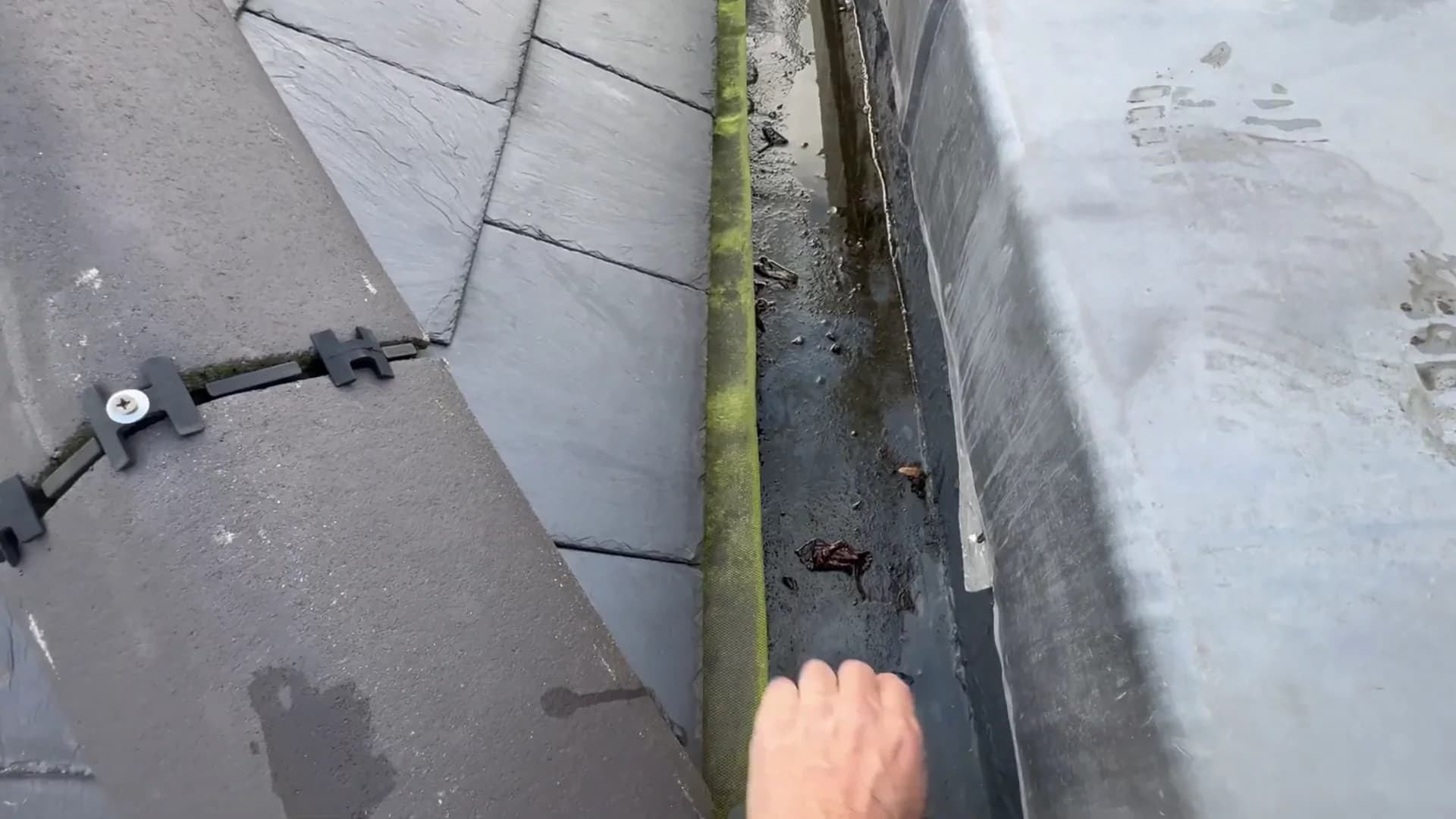
Water was entering a roof that was only a couple of years old. The survey found pooling in the fibreglass box gutter and upstands that were too low at the affected section, allowing water to backtrack into the roof.
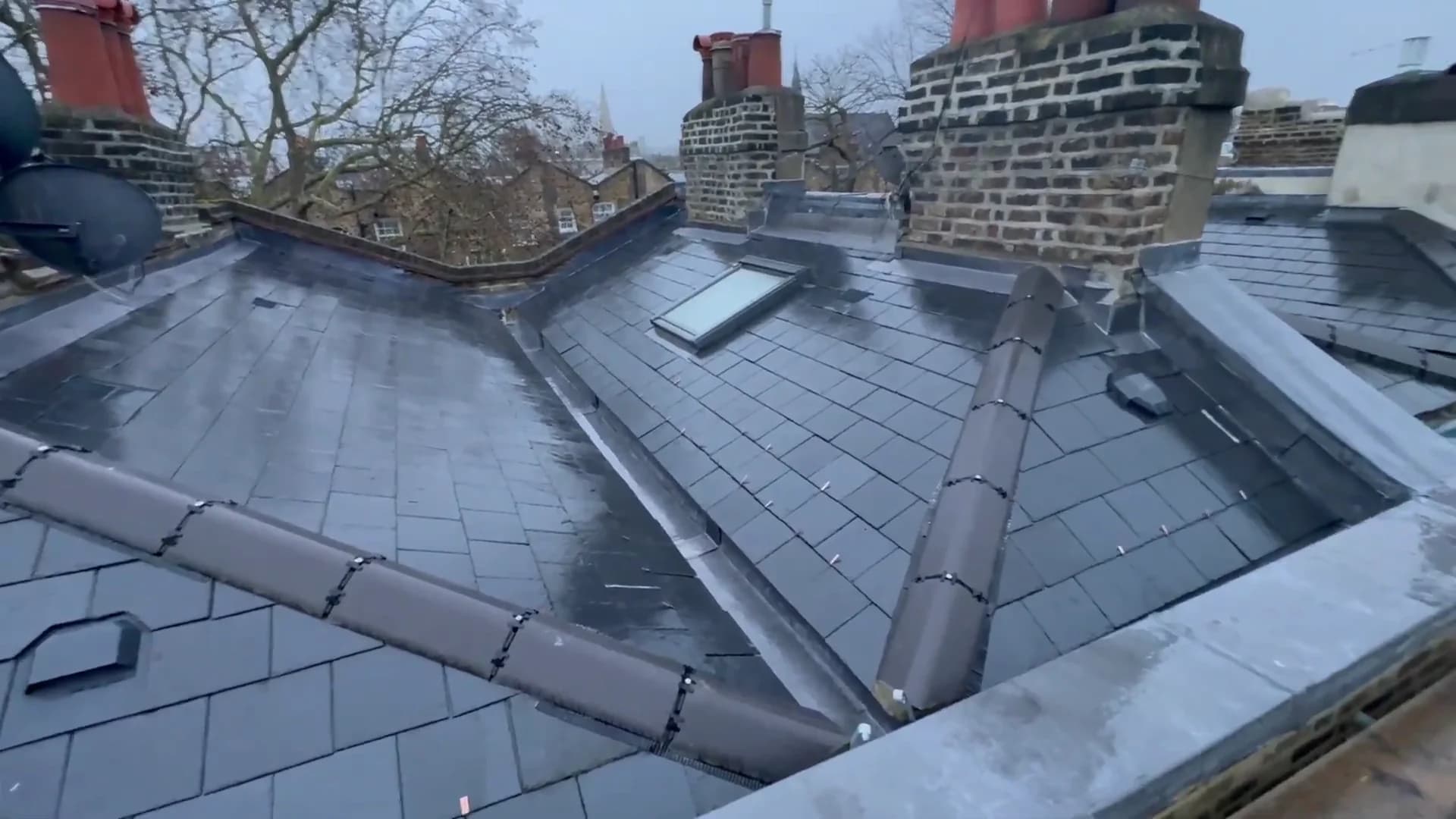
The slates were stripped back to reach the gutter junctions. The repair plan was to replace the box gutters with lead, take the lead farther up the roof at those junctions and renew the surrounding leadwork.
02 / On site / Chelsea
The completed leadwork
New lead box gutters, wall flashings and expansion joints address the failed gutter lining.
The completed work brings together lead box gutters and new flashings along the walls. It addresses the failed resin gutter lining and surrounding leadwork while retaining the recently renewed roof covering.
Expansion joints incorporate rubber sections joined to the lead. These accommodate movement and reduce the risk of the lead splitting at the joints.
Roofing, explained
Why the gutter leaked at the lower ends.
An upstand is the part of a gutter lining that turns upwards at its edges, separating the water channel from the adjoining roof or wall. Here, the problem was not simply the age or appearance of the lining. Water was pooling, and the low upstands at the affected end sections allowed it to backtrack into the roof.
The middle section had more upstand height because of the fall of the roof. That difference matters: one apparently satisfactory stretch did not mean the same detail worked throughout the gutter. The repair needed to address the vulnerable lower junctions, with the lead taken farther up beneath the slates rather than stopping at the inadequate existing height.
Chelsea / Before and after
The gutter changed. The roof stayed.
Roofing, explained
Opening the junction, not replacing the roof.
The slates had to be lifted to expose the junctions hidden underneath them. Access to those concealed edges made this more involved than applying a surface patch to the gutter, but it did not turn the job into a whole-roof replacement. The recently renewed covering was retained; the work concentrated on the box gutters and surrounding flashings.
Lead also needs to accommodate movement as temperatures change. The flexible sections in the new gutter joints provide for that movement instead of forcing the metal to absorb it at a rigid connection. Together, the upstands, wall flashings and movement joints explain the repair more usefully than a change of material alone.
Roofing, explained
What to ask about a leaking box gutter.
For homeowners facing a similar leak, a young roof should not rule out a junction defect. Ask a surveyor to assess the gutter along its full run: where does water collect, how does the upstand height vary, and which connections disappear beneath the covering? Any opening-up should be carried out by a roofer, not attempted from the roof edge.
A repair proposal should distinguish what will be retained from what must be lifted or renewed, and explain drainage and movement detailing. The right scope depends on the condition of the gutter, its junctions and the surrounding roof—not on the age of the covering or the material name alone.
Your roof / The next detail
Need similar work?
Every roof needs its own inspection. We will explain what this work may mean for your property and recommend the right next step.